

Explore Notes
Explore a comprehensive library of graduate and undergraduate mechanics notes. Search, filter, and study peer-reviewed materials.
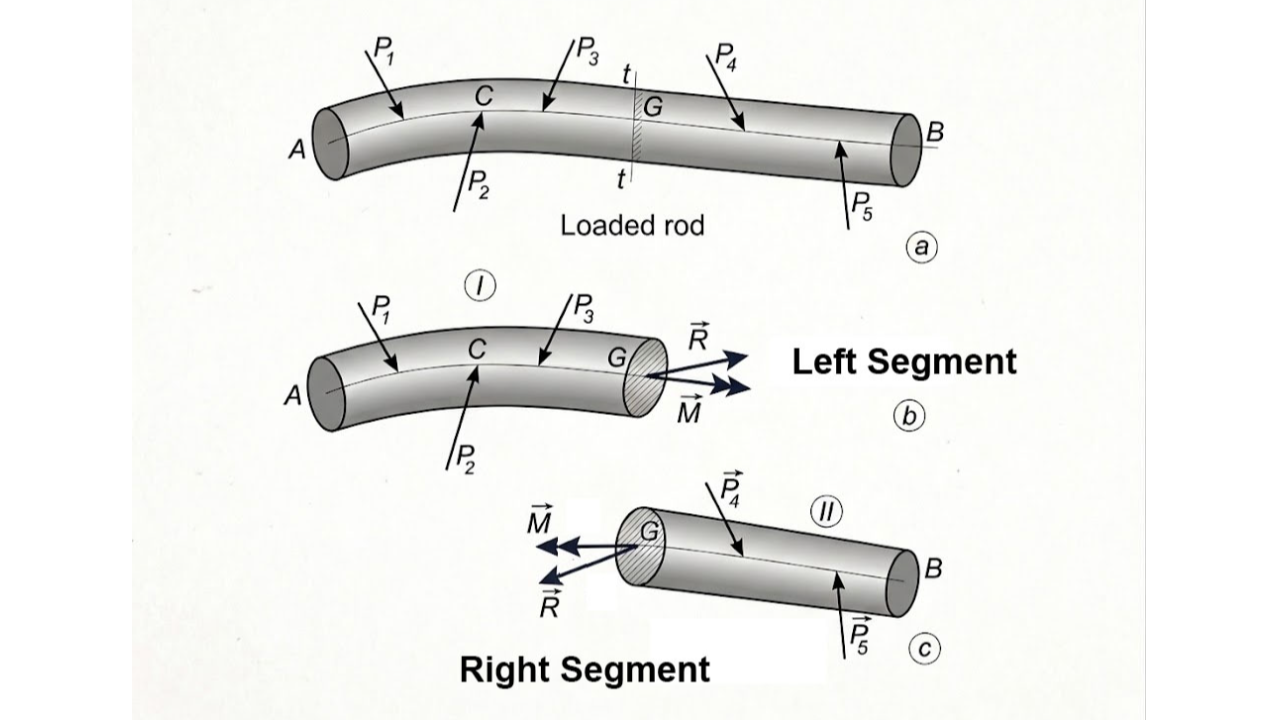
Internal Forces and Their Components
Transitioning from global external equilibrium to localized material safety, this section introduces the concept of internal forces using the foundational Method of Sections. It details the equivalent force-couple system at the cross-sectional centroid, maps the six 3D internal components using a standardized longitudinal x-axis and transverse y-z plane, and establishes the sign conventions for 2D beam analysis.
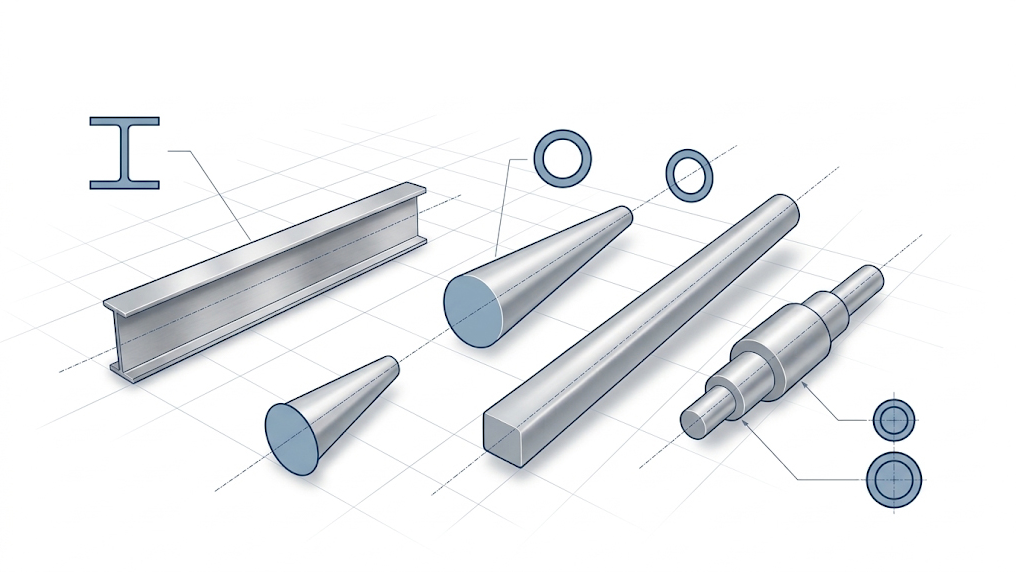
Fundamentals of Mechanics of Bars
A comprehensive look into structural engineering elements, this topic maps out how three-dimensional members are idealized into one-dimensional bars based on their neutral axis and cross-sections. It contrasts uniform prismatic members with nonuniform tapered and stepped bars, detailing the physical implications of cross-sectional variation on structural stiffness and stress concentrations.
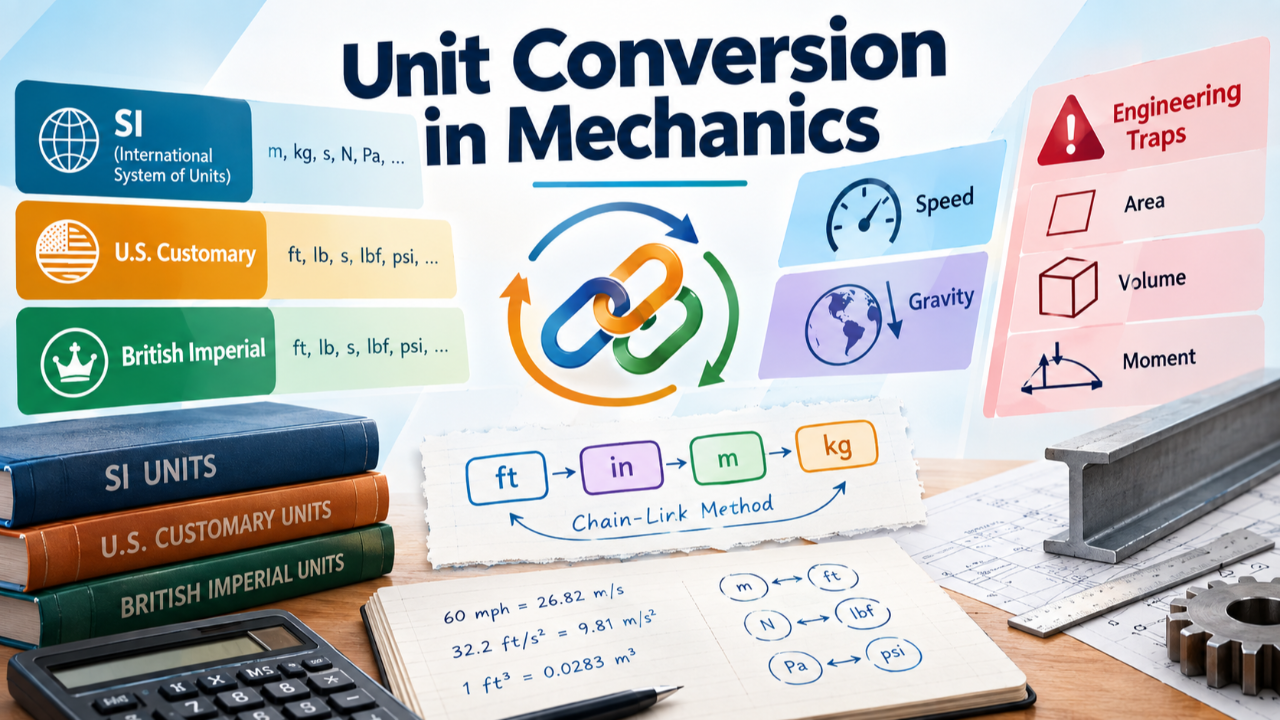
Conversion between Different Unit Systems
This section provides a comprehensive guide to converting physical quantities between the SI, U.S. Customary, and British Imperial systems. It details the step-by-step Chain-Link Method for complex, multi-unit (composite) conversions such as speed and gravity, while highlighting critical engineering traps in area, volume, and moment conversions

SI Units Prefixes and Engineering Notation
This section covers SI base units, prefixes, and engineering notation, focusing on crucial guidelines for area and volume conversions. It highlights the essential 1 MPa = 1 N/mm² unit harmony to prevent calculation errors and streamline stress analysis in mechanics of materials.
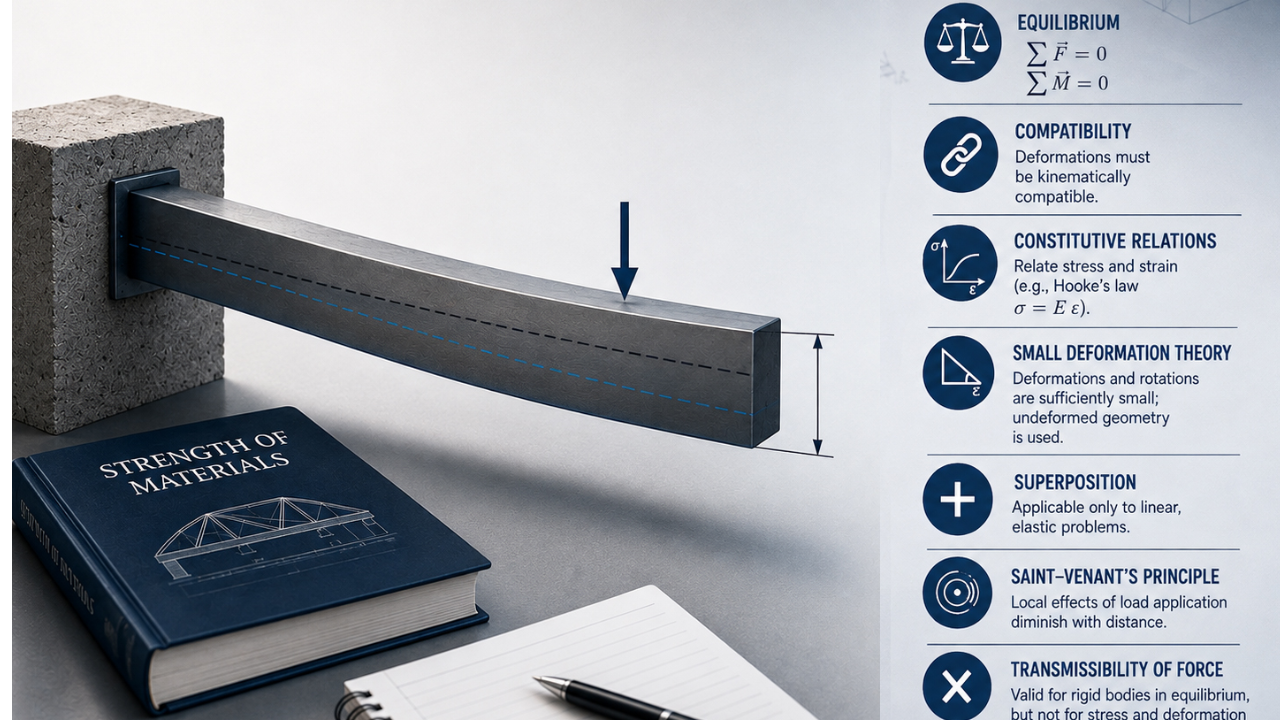
Fundamental Principles and Assumptions in Mechanics of Materials
This section outlines the core principles of Mechanics of Materials: equilibrium, compatibility, and constitutive relations. It explains essential engineering assumptions, including small deformation theory, the superposition principle, Saint-Venant's principle, and why force transmissibility is invalid for internal stress analysis.
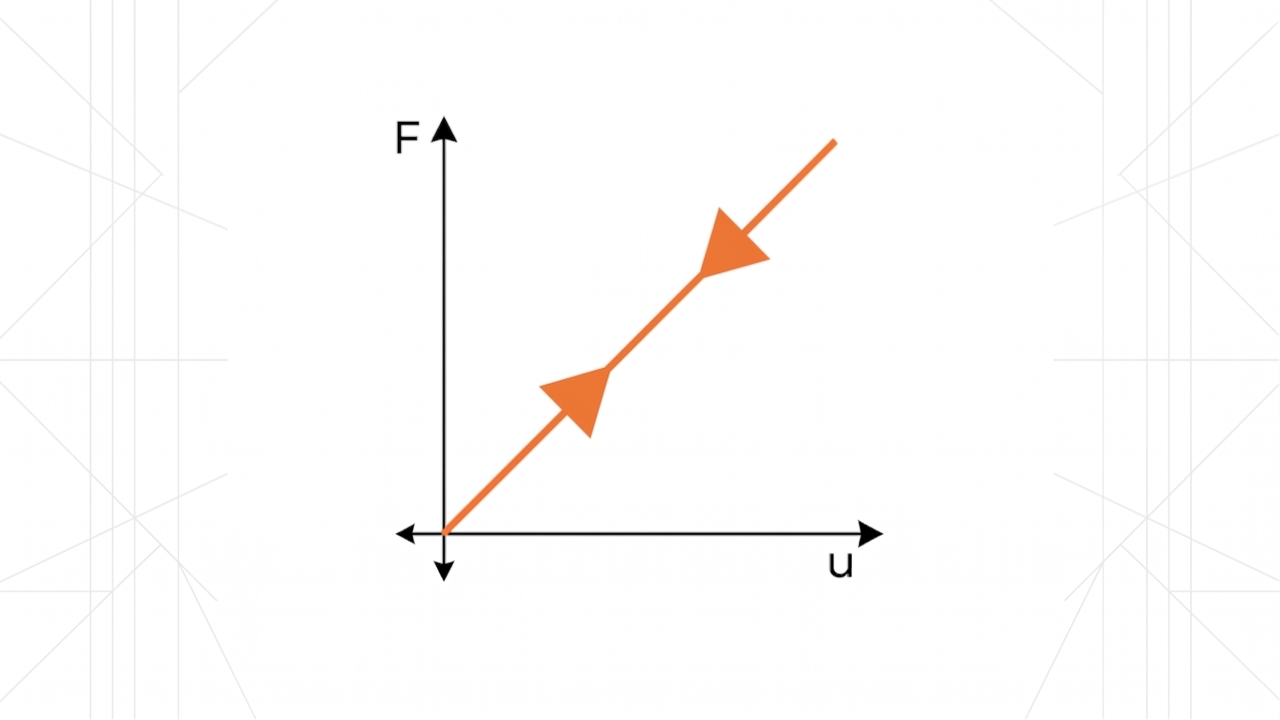
Material Idealizations
Material Idealizations simplifies complex mechanical behaviors. It defines elastic, plastic, and elastoplastic materials to classify deformations, establishes Hooke’s law for linear elasticity, and categorizes materials as homogeneous or isotropic to streamline structural calculations.

Introduction to Mechanics of Materials
Mechanics of Materials analyzes how external loads affect deformable solids. It focuses on internal forces, stress, strain, and deformation to solve two main engineering problems: analysis (checking structural safety) and design (sizing components and selecting materials).